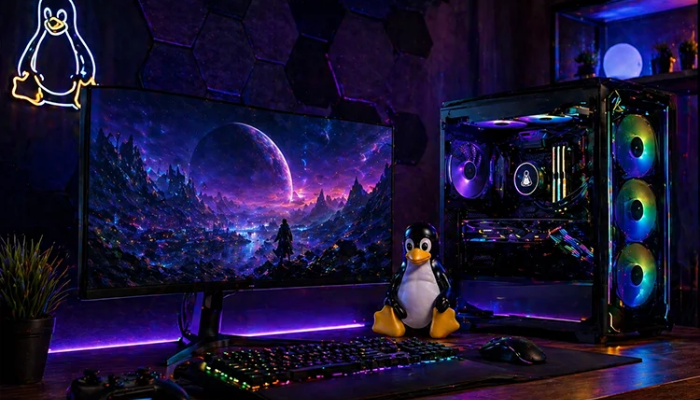

Technology is changing at a remarkable pace, but some developments have a deeper impact than others. The growing conversation around trend pblinuxtech reflects this shift toward Linux, open-source software, artificial intelligence, cloud infrastructure, cybersecurity, automation, and modern digital experiences. What once seemed like specialized technology for developers and system administrators has increasingly become part of mainstream computing.
For businesses, students, developers, gamers, and technology enthusiasts, understanding these changes is no longer simply a matter of curiosity. Linux powers an enormous portion of the internet and cloud infrastructure, while open-source projects increasingly influence artificial intelligence, software development, cybersecurity, and gaming. PBLinuxTech’s own technology coverage spans subjects ranging from UX and smart scheduling to AI video workflows, cybersecurity, and cloud-related technologies.
This guide takes a broader look at trend pblinuxtech, explaining the technologies behind the movement, why Linux remains relevant, how AI and cloud computing are changing the ecosystem, and what these developments could mean for the future. Rather than treating technology trends as isolated buzzwords, the goal is to understand how they connect and how people can make practical use of them.
Understanding trend pblinuxtech and the New Linux Ecosystem
At its core, trend pblinuxtech can be understood as a way of describing the evolving intersection between Linux, open-source development, modern infrastructure, and emerging technology. Linux is no longer confined to a command-line environment used by highly technical specialists. It appears across servers, cloud platforms, embedded systems, developer workstations, containers, networking equipment, supercomputing environments, and increasingly visible consumer devices.
The broader PBLinuxTech ecosystem emphasizes practical technology knowledge rather than a single Linux distribution or software package. Its published material covers Linux tutorials, open-source software, cybersecurity, cloud computing, programming, DevOps, artificial intelligence, networking, and emerging technologies. This breadth matters because modern computing is increasingly interconnected. A developer might use Linux locally, deploy an application through containers, host it in the cloud, automate infrastructure with configuration tools, and use AI to analyze application data—all within one workflow.
Another important characteristic is flexibility. Linux allows users and organizations to choose distributions, desktop environments, software stacks, security configurations, and development tools according to their requirements. This adaptability makes it particularly attractive when organizations want control over their infrastructure rather than being locked into one proprietary ecosystem. PBLinuxTech describes its mission around open-source innovation and providing Linux and cloud solutions for both technology enthusiasts and businesses.
The significance of this trend also comes from accessibility. Open-source software can reduce licensing costs and allow developers to examine, modify, and redistribute code according to the relevant license. For students and independent developers, that creates an environment where experimentation is possible without requiring a large commercial software budget. For businesses, the same flexibility can support customized infrastructure and specialized applications.
AI, Automation, and Cloud Computing Are Transforming Linux
Artificial intelligence has become one of the strongest forces influencing modern technology, and Linux is deeply involved in the infrastructure supporting that transformation. AI workloads require scalable computing, high-performance processors, GPUs, data pipelines, orchestration systems, and reliable operating environments. Linux frequently sits underneath these components, making its role less visible to ordinary users but extremely important to the AI economy.
The relationship between AI and the trend pblinuxtech ecosystem goes beyond simply running machine-learning software on Linux. Automation is changing how infrastructure is created and maintained. Administrators can use tools such as Ansible and Terraform to automate repetitive configuration and infrastructure tasks, reducing manual intervention and making complex environments more consistent. Earlier PBLinuxTech coverage specifically identifies automation, cloud-native infrastructure, and security as important areas in the Linux technology landscape.
Cloud computing reinforces this development. Modern organizations increasingly operate applications across public clouds, private infrastructure, hybrid environments, and edge locations. Linux is well suited to these environments because it can be configured for different workloads and hardware profiles. Lightweight distributions can also be useful in resource-constrained environments where a full desktop operating system would be unnecessary.
Containers provide another major connection between Linux and cloud-native development. Technologies such as Docker and Kubernetes allow applications to be packaged, deployed, scaled, and managed more consistently across environments. Instead of treating an application as something installed manually on a single machine, modern teams increasingly treat infrastructure as programmable and repeatable. This approach makes software delivery faster while reducing some of the inconsistencies associated with traditional deployments.
Automation also changes the skills required from technology professionals. Knowing basic Linux commands remains useful, but modern practitioners benefit from understanding version control, containers, infrastructure as code, CI/CD pipelines, security practices, cloud platforms, and observability. The most valuable trend is therefore not merely learning one Linux distribution—it is learning how Linux fits into a larger technology stack.
Security, Privacy, and Open-Source Development Are Becoming More Important
Cybersecurity has become a central concern as organizations connect more applications, devices, employees, and services. The attack surface has expanded alongside digital transformation, making operating-system security, patch management, identity controls, network monitoring, and application security increasingly important. Linux environments are not automatically secure simply because they use Linux, but the platform provides extensive tools and configuration options for building hardened systems.
The security side of trend pblinuxtech is particularly relevant because open-source technology creates both opportunities and responsibilities. Publicly available source code can enable researchers and developers to inspect software, identify vulnerabilities, propose fixes, and build security tools. At the same time, open-source projects require responsible maintenance, timely updates, dependency management, and careful configuration. Transparency is valuable, but transparency alone does not guarantee security.
Privacy is another factor influencing interest in open-source software. Users increasingly want to understand how their information is collected, processed, and stored. Self-hosted applications and open-source alternatives can provide more control in certain circumstances, although they also require users or organizations to take responsibility for maintenance, backups, authentication, and security updates.
For businesses, the most practical approach is not to assume that Linux eliminates cybersecurity risks. Instead, Linux should be incorporated into a broader security strategy. That strategy can include least-privilege access, multi-factor authentication, network segmentation, encrypted communications, regular patching, vulnerability management, logging, backups, and incident-response planning.
PBLinuxTech’s broader technology coverage reflects this increasing emphasis on cybersecurity, including topics such as vendor cyber-risk assessment, malware intelligence, digital risk protection, and continuous monitoring. This illustrates an important reality: the modern Linux conversation is not simply about operating systems. It increasingly involves the complete lifecycle of digital infrastructure.
Linux Gaming, Hardware Optimization, and the Changing User Experience
One of the most interesting developments associated with trend pblinuxtech is the changing perception of Linux gaming. For many years, Linux was considered a difficult platform for mainstream gaming because of limited game support, driver concerns, and compatibility problems. That picture has changed considerably as compatibility technologies, graphics drivers, gaming-focused distributions, and open-source development have matured.
Compatibility layers have played an especially important role. Instead of requiring every Windows game to receive a completely separate Linux version, technologies such as Proton can translate or adapt important components so that many Windows games can operate within Linux-based environments. PBLinuxTech’s gaming coverage highlights Linux gaming performance, driver updates, compatibility improvements, and system optimization as important areas for players.
Hardware has also contributed to this evolution. Better GPU support, modern graphics APIs, faster processors, and gaming-focused handheld devices have helped make Linux more visible among mainstream players. The Steam Deck, in particular, demonstrated that a Linux-based gaming environment could support a polished consumer experience rather than merely serving as a technical experiment.
However, realistic expectations remain important. Linux gaming compatibility is not universal. Some games can work extremely well, while others may experience problems because of anti-cheat systems, proprietary launchers, unsupported technologies, or publisher decisions. The most sensible approach for a gamer considering Linux is to check compatibility for the games they actually play rather than relying on general claims about the platform.
The user experience is nevertheless improving. Modern desktop environments such as GNOME and KDE Plasma provide polished graphical interfaces, while gaming-focused tools make driver management, performance tuning, controller configuration, and game installation easier than they were in the past. As a result, Linux is becoming less about accepting technical inconvenience and more about choosing a different computing environment.
What trend pblinuxtech Means for the Future of Technology
Looking ahead, trend pblinuxtech is likely to become increasingly connected to several overlapping movements: edge computing, artificial intelligence, cloud-native infrastructure, open-source hardware and software, cybersecurity automation, and decentralized development. None of these trends exists in isolation. AI requires infrastructure; infrastructure requires operating systems; cloud systems require automation; automation requires security; and all of these areas benefit from developers who can work across multiple technical layers.
Edge computing could be particularly significant. Instead of sending every computation to a centralized data center, organizations can process selected workloads closer to where data is generated. This can be valuable for industrial sensors, smart cities, telecommunications, healthcare systems, connected vehicles, and other applications that need low latency. Lightweight Linux environments can be adapted for many of these specialized devices.
Sustainability may also strengthen the case for efficient computing. Older computers that are unsuitable for demanding modern operating systems can sometimes remain useful with appropriately chosen lightweight Linux distributions. This does not make every old machine suitable for every task, but extending hardware lifecycles can reduce unnecessary replacement and provide affordable computing options for students, schools, small organizations, and community projects.
The future will also depend on people rather than technology alone. Linux and open-source ecosystems thrive because developers, maintainers, researchers, documentation writers, testers, translators, and users contribute to shared projects. Building practical skills therefore means more than memorizing terminal commands. It means learning how to troubleshoot, read documentation, understand system architecture, evaluate security risks, automate repetitive work, and collaborate effectively.
For beginners, a sensible path is to start with a mainstream Linux distribution, learn basic terminal commands, understand files and permissions, experiment with software installation, and gradually explore Git, containers, networking, scripting, and cloud services. More advanced users can move toward Kubernetes, infrastructure as code, cybersecurity, AI workloads, or Linux gaming optimization. PBLinuxTech’s tutorial-oriented material similarly emphasizes practical Linux administration, command-line skills, desktop customization, and troubleshooting.
The most important lesson is that trend pblinuxtech should not be treated as a temporary buzzword. It represents a broader conversation about how open technology, Linux, automation, cloud computing, AI, security, and user-focused innovation are converging. The specific tools will continue to change, but the underlying principles—flexibility, efficiency, interoperability, transparency, and community-driven development—are likely to remain important.
Frequently Asked Questions About trend pblinuxtech
1. What is trend pblinuxtech?
trend pblinuxtech is a term associated with the evolving technology trends surrounding Linux, open-source software, cloud computing, cybersecurity, automation, AI, and modern digital infrastructure. It can be viewed as a broader technology theme rather than a single software product or Linux distribution.
2. Is PBLinuxTech only about Linux?
No. Although Linux and open-source technology are important parts of its identity, PBLinuxTech’s published material covers a much broader range of subjects, including cybersecurity, cloud computing, programming, DevOps, AI, gaming, hardware, and emerging technology.
3. Why is Linux important to modern technology?
Linux provides a flexible operating environment used across many forms of computing infrastructure. Its adaptability, open-source model, extensive tooling, and large developer community make it useful for servers, cloud platforms, containers, embedded systems, development environments, and many other workloads.
4. Is Linux difficult for beginners?
Linux can have a learning curve, particularly when users begin working with the terminal, permissions, networking, or system configuration. However, modern distributions offer graphical interfaces and software-management tools that make everyday tasks much easier. Beginners can learn gradually without mastering the command line immediately.
5. Is Linux good for gaming in 2026?
Linux gaming has improved significantly, particularly through compatibility technologies, better graphics support, and gaming-focused hardware. However, compatibility varies from game to game. Players should check their specific titles, especially multiplayer games that depend on proprietary anti-cheat technologies.
6. How does AI relate to trend pblinuxtech?
AI requires substantial computing infrastructure, and Linux frequently provides the operating environment for servers, development systems, containers, and specialized workloads. AI also creates demand for automation, monitoring, scalable infrastructure, and efficient resource management—all areas closely connected with modern Linux technology.
7. Can businesses benefit from Linux and open-source technology?
Yes. Businesses can potentially benefit from reduced licensing expenses, customization options, automation capabilities, broad hardware support, and access to large open-source ecosystems. The actual benefits depend on the organization’s technical requirements, staffing, security practices, and support model.
8. Is open-source software automatically more secure?
No. Open-source software can offer transparency and enable community review, but security still depends on code quality, maintenance, configuration, vulnerability management, and timely updates. Organizations should evaluate open-source software using the same disciplined security principles they apply to proprietary technology.
9. What should someone learn to follow trend pblinuxtech?
A strong foundation includes Linux basics, command-line usage, networking, Git, scripting, containers, cybersecurity fundamentals, and cloud concepts. From there, learners can specialize in areas such as DevOps, Kubernetes, AI infrastructure, cybersecurity, cloud engineering, or Linux gaming.
10. What is the future of trend pblinuxtech?
The future is likely to involve deeper integration between Linux, AI, cloud computing, edge computing, automation, cybersecurity, and gaming. As technology becomes more distributed and software-driven, flexible operating environments and open-source tools are likely to remain important components of digital innovation.
Conclusion
The significance of trend pblinuxtech goes far beyond a collection of Linux-related updates. It represents a wider movement toward flexible infrastructure, open-source collaboration, cloud-native computing, automation, stronger cybersecurity, AI-powered systems, and increasingly capable Linux-based user experiences. These developments are changing how software is built, deployed, secured, and experienced.
For developers, the trend creates opportunities to learn tools that are relevant across multiple industries. For businesses, it highlights alternatives to rigid technology stacks and encourages more adaptable infrastructure. For gamers, it demonstrates that Linux can offer an increasingly credible gaming environment. For students and technology enthusiasts, it provides an accessible route into modern computing without requiring every tool to come from a proprietary vendor.
The key is to approach the subject practically. Rather than chasing every new technology announcement, users should develop transferable skills, experiment with real projects, follow trustworthy technical documentation, and understand the strengths and limitations of each tool. Linux, open source, AI, cloud computing, automation, and cybersecurity are not separate worlds anymore; they are becoming interconnected parts of the same digital ecosystem.
As these technologies continue to evolve, trend pblinuxtech will remain useful as a lens through which to understand that convergence. The future of computing will not be defined by one operating system, one application, or one emerging technology. It will be shaped by ecosystems—and Linux and open-source development are positioned to remain important foundations within them.